The term "open world" gets used so freely these days that it's easy to forget how radical the concept originally was. For most of gaming's early history, games were corridors — linear experiences with defined starts, defined ends, and very little room to wander. The shift toward giving players a world to inhabit rather than a path to follow didn't happen overnight, and it certainly didn't happen cleanly. It was an evolution built on bold experiments, technical limitations being pushed past their limits, and the occasional stroke of genuine design genius.
This article doesn't attempt to rank games from one to ten, because that's rarely how these things actually work in practice. Instead, we want to trace the lineage — to follow the thread from the games that first allowed meaningful exploration to the ones that changed what "open world" could even mean as a design philosophy.
Where It All Started: The Early Experiments
Before the term existed, there were games that understood the appeal of player freedom. Elite (1984) gave players an entire galaxy to navigate and trade within — staggeringly ambitious for its time, and almost certainly incomprehensible to modern players without a manual. It was technically open, but not in the way we'd recognise today. The world was procedurally generated, vast, and largely empty of directed purpose.
The Legend of Zelda (1986) is often cited as the grandfather of the open world, and while that's a slight overstatement, the case is worth making. Players weren't funnelled from dungeon to dungeon — the overworld existed as a space to be understood on its own terms, with secrets hidden not in scripted events but in the physical world itself. You learned it. You carried a mental map of it. That relationship between player and environment was genuinely new.
It wasn't until the 1990s, however, that the pieces started coming together in ways that look familiar to modern players.
GTA III: The Blueprint Nobody Expected
Grand Theft Auto III arrived in 2001 and effectively invented a genre that hadn't properly existed before. Liberty City wasn't just a backdrop — it was a functioning urban simulation that players could interact with on their own terms. You could follow the missions, or you could simply exist in the city. Drive around. Cause chaos. See what happened.
What Rockstar understood, perhaps intuitively, was that player agency doesn't require direction. The world itself can be the content. The emergent stories that players create — the unexpected car chases, the absurd accidents, the moments that no designer scripted — became as compelling as anything the game officially offered.
The sequels refined and expanded on this template, but the original principle held: give players a city, give them tools, and step back. GTA III's influence on the games that followed it is almost impossible to overstate. You can trace a direct line from Liberty City to nearly every open world game released in the following two decades.
The Witcher 3: When Story Met Scale
For years after GTA III, the dominant open world design philosophy prioritised scale over depth. Bigger maps, more activities, more icons on the minimap. It worked commercially, but something was often lost in the translation — the sense that the world had been constructed with care, that it had an interior life beyond its surface dimensions.
CD Projekt Red's The Witcher 3: Wild Hunt (2015) arrived as an emphatic corrective. Here was an open world in which every village had a story worth discovering, every quest felt authored rather than generated, and the landscape itself communicated history without the need for text boxes. The game's writing elevated a genre that had often treated narrative as a secondary concern.
Geralt of Rivia's world felt inhabited in a way that many open world games simply don't. The political tensions between factions had logic. The monsters had ecologies. The side quests, notoriously, often contained more emotional weight than most games' main storylines. The Witcher 3 demonstrated conclusively that scale and depth weren't mutually exclusive — they just required significantly more craft and investment to achieve simultaneously.
Red Dead Redemption 2: The Art of Restraint
Rockstar returned to the open world conversation in 2018 with Red Dead Redemption 2, and the game immediately distinguished itself through its willingness to slow down. In an industry increasingly oriented toward constant stimulation and dopamine loops, RDR2 asked players to appreciate a horse trotting through a mountain pass. To watch the weather change. To let a conversation with a stranger develop without rushing to the next objective marker.
That slowness was a deliberate choice, and it polarised players who expected the kinetic pace of GTA. But for those who gave it time, the result was something genuinely rare: an open world that felt like a place rather than an activity delivery system. Arthur Morgan's story worked precisely because the world around him was treated with the same seriousness as the characters in it.
Breath of the Wild: Rethinking the Rules Entirely
In 2017, Nintendo released The Legend of Zelda: Breath of the Wild and quietly demolished several decades' worth of conventional open world wisdom. The game's Hyrule contained no waypoints demanding attention, no checklist of activities to complete. It had something rarer: a world governed by consistent physical rules that players could exploit however they chose.
The genius of Breath of the Wild's design lies in its respect for player intelligence. Every system in the game interacts with every other system. Wood burns. Metal conducts electricity. Wind affects fire. If you understand the rules, you can approach any problem from multiple directions — and the game actively encourages the discovery of solutions it never anticipated.
This design philosophy — sometimes called "emergent" or "physics-based" design — has since influenced a generation of developers. The idea that a coherent ruleset can generate more interesting moments than scripted set-pieces is still rippling through the industry.
Elden Ring: The Open World as Challenge
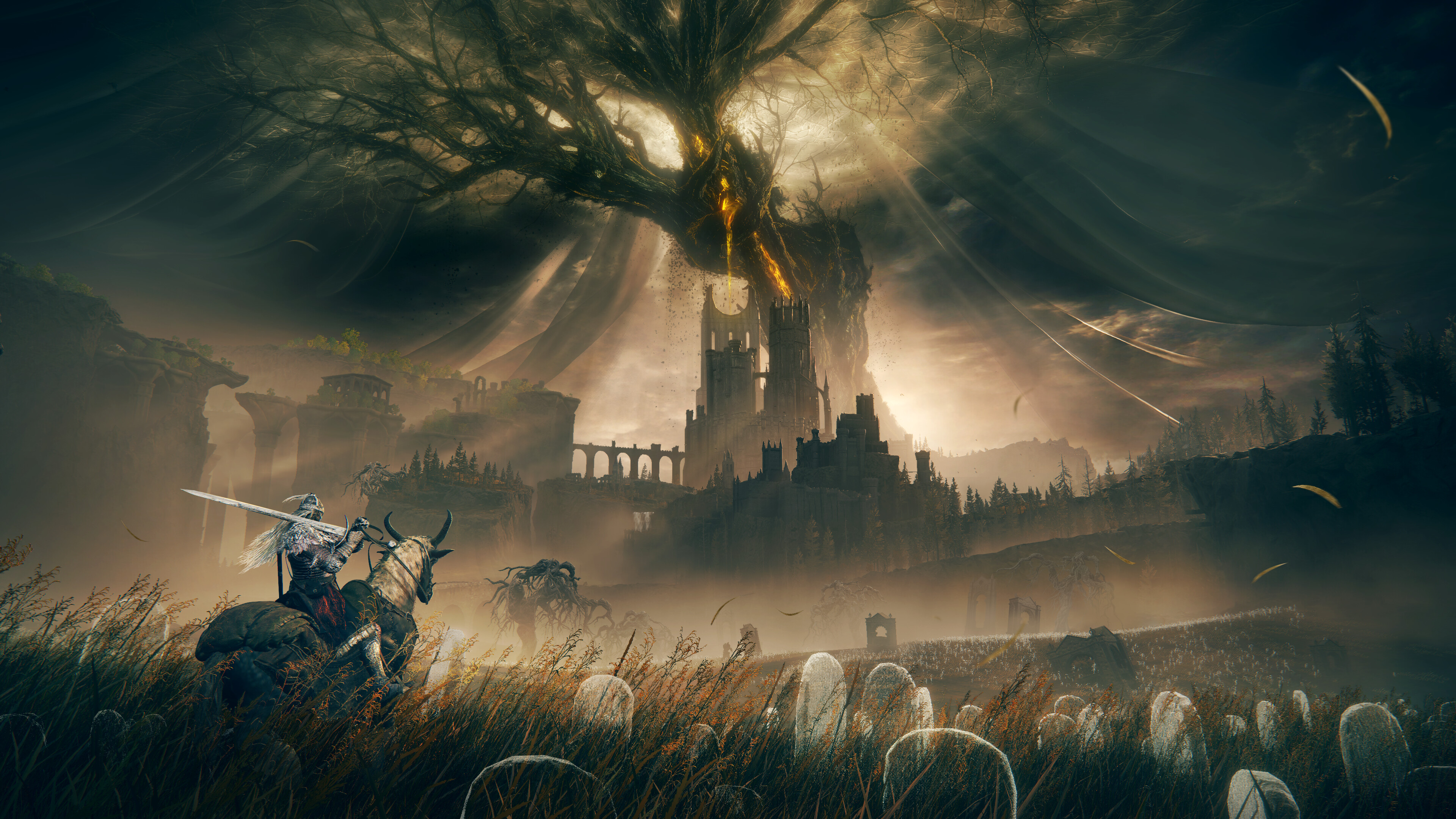
FromSoftware's Elden Ring (2022) took the Soulsborne formula — deliberately paced, uncompromisingly difficult, deeply atmospheric — and placed it within a genuine open world for the first time. The result was remarkable: an open world that used its scale not to dilute challenge but to create a sense of genuine discovery and earned progress.
In most open world games, player progression is managed through visible hierarchies — you're told which areas are appropriate for your level, and the map is colour-coded accordingly. Elden Ring dispenses with almost all of that. You can wander into areas well beyond your current capability and die horribly for doing so. But you can also circle back when you're stronger, and the memory of that earlier defeat gives the eventual return a charge that no amount of quest markers can manufacture.
What Open World Design Still Gets Wrong
For all its achievements as a genre, the open world continues to produce games that feel less like lived-in worlds and more like content packages with the seams showing. The open world checklist — towers to climb, camps to clear, collectibles to gather — has become a formula that some studios apply without asking whether it serves the experience they're creating.
The best open worlds understand that space itself is a form of communication. Emptiness, properly deployed, creates atmosphere. Distance creates anticipation. The long ride across a valley, with nothing to do but watch the landscape, can build more tension than any cutscene if the world around it has been built with genuine craft.
That's the lesson the genre keeps learning and occasionally forgetting: an open world is only as good as what it puts in the space. Not how much, but how well.
Where the Genre Goes Next
Modern hardware has removed many of the technical constraints that once defined open world design. Load times are becoming obsolete, draw distances are expanding, and the density of detail that studios can achieve continues to grow. What remains constant is the fundamental design question: what do you put in the space, and why?
The most interesting open world experiments in recent years have moved away from maximum scale toward maximum intentionality. Games that are smaller than they could be because their developers made deliberate choices about what belonged and what didn't. That restraint, counterintuitively, tends to produce more memorable worlds than the ones that simply try to be the biggest.
The open world genre has given us some of the most extraordinary experiences in gaming history. It has also given us an enormous amount of forgettable busywork. The difference, almost always, comes down to whether the team behind the game treated their world as a place worth inhabiting or as a vehicle for delivering content. The best ones always understood the distinction.